메인 콘텐츠로 건너뛰기
DSPy는 특히 파이프라인 내에서 LM을 한 번 이상 사용할 때, LM 프롬프트와 가중치를 알고리즘적으로 최적화하기 위한 프레임워크입니다. Weave는 DSPy 모듈과 함수를 사용해 수행되는 호출을 자동으로 추적하고 로깅합니다.

트레이싱

언어 모델 애플리케이션의 트레이스를 개발 및 프로덕션 환경 모두에서 중앙화된 위치에 저장하는 것은 중요합니다. 이러한 트레이스는 디버깅에 유용할 뿐만 아니라, 애플리케이션을 개선하는 데 도움이 되는 데이터셋으로도 활용할 수 있습니다. Weave는 DSPy에 대한 트레이스를 자동으로 캡처합니다. 추적을 시작하려면 weave.init(project_name="<YOUR-WANDB-PROJECT-NAME>")를 호출한 다음 라이브러리를 평소처럼 사용하면 됩니다.
import os
import dspy
import weave

os.environ["OPENAI_API_KEY"] = "<YOUR-OPENAI-API-KEY>"

weave.init(project_name="<YOUR-WANDB-PROJECT-NAME>")

lm = dspy.LM('openai/gpt-4o-mini')
dspy.configure(lm=lm)
classify = dspy.Predict("sentence -> sentiment")
classify(sentence="it's a charming and often affecting journey.")
dspy_trace.png Weave는 DSPy 프로그램에서 발생하는 모든 LM 호출을 로깅하여 입력, 출력 및 메타데이터에 대한 자세한 정보를 제공합니다.

직접 정의한 DSPy Module과 Signature 추적

Module은 DSPy 프로그램에서 프롬프트 기법을 추상화하며, 학습 가능한 파라미터를 포함하는 기본 구성 요소입니다. Signature는 DSPy Module의 입력/출력 동작을 선언적으로 정의한 것입니다. Weave는 DSPy 프로그램에 포함된 모든 기본 제공 및 사용자 정의 Signature와 Module을 자동으로 추적합니다.
import os
import dspy
import weave

os.environ["OPENAI_API_KEY"] = "<YOUR-OPENAI-API-KEY>"

weave.init(project_name="<YOUR-WANDB-PROJECT-NAME>")

class Outline(dspy.Signature):
    """주제에 대한 철저한 개요를 작성합니다."""

    topic: str = dspy.InputField()
    title: str = dspy.OutputField()
    sections: list[str] = dspy.OutputField()
    section_subheadings: dict[str, list[str]] = dspy.OutputField(
        desc="mapping from section headings to subheadings"
    )


class DraftSection(dspy.Signature):
    """기사의 최상위 섹션 초안을 작성합니다."""

    topic: str = dspy.InputField()
    section_heading: str = dspy.InputField()
    section_subheadings: list[str] = dspy.InputField()
    content: str = dspy.OutputField(desc="markdown-formatted section")


class DraftArticle(dspy.Module):
    def __init__(self):
        self.build_outline = dspy.ChainOfThought(Outline)
        self.draft_section = dspy.ChainOfThought(DraftSection)

    def forward(self, topic):
        outline = self.build_outline(topic=topic)
        sections = []
        for heading, subheadings in outline.section_subheadings.items():
            section, subheadings = (
                f"## {heading}",
                [f"### {subheading}" for subheading in subheadings],
            )
            section = self.draft_section(
                topic=outline.title,
                section_heading=section,
                section_subheadings=subheadings,
            )
            sections.append(section.content)
        return dspy.Prediction(title=outline.title, sections=sections)


draft_article = DraftArticle()
article = draft_article(topic="World Cup 2002")
Weave에서 DSPy 사용자 정의 모듈 트레이스, 모듈 실행 흐름 및 트레이스 세부 정보

DSPy 프로그램의 최적화 및 평가

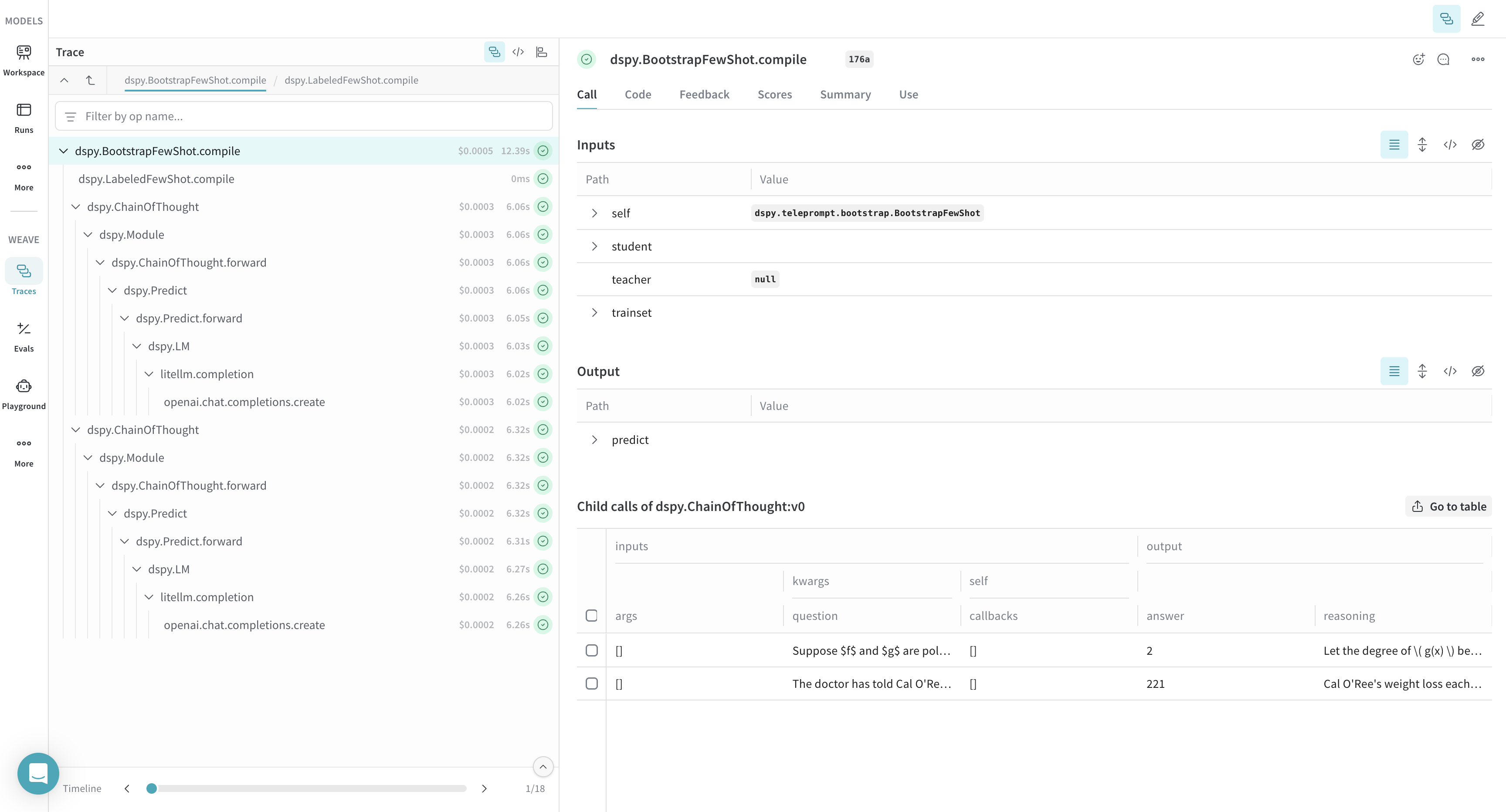
Weave는 또한 DSPy 옵티마이저와 Evaluation 호출에서 발생하는 트레이스를 자동으로 캡처하여, 개발 세트에서 DSPy 프로그램의 성능을 개선하고 평가하는 데 사용할 수 있습니다.
import os
import dspy
import weave

os.environ["OPENAI_API_KEY"] = "<YOUR-OPENAI-API-KEY>"
weave.init(project_name="<YOUR-WANDB-PROJECT-NAME>")

def accuracy_metric(answer, output, trace=None):
    predicted_answer = output["answer"].lower()
    return answer["answer"].lower() == predicted_answer

module = dspy.ChainOfThought("question -> answer: str, explanation: str")
optimizer = dspy.BootstrapFewShot(metric=accuracy_metric)
optimized_module = optimizer.compile(
    module, trainset=SAMPLE_EVAL_DATASET, valset=SAMPLE_EVAL_DATASET
)
최적화 프로세스와 성능 향상을 보여주는 Weave의 DSPy 옵티마이저 트레이스